Offering Free In-Person Multi-day Courses on AI & Society, Worldwide
Mor Naaman, Cornell Tech | Sabbatical 2026-27
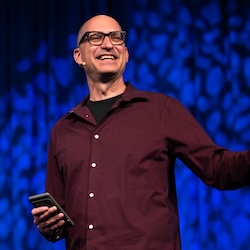
For my 2026–2027 sabbatical, I will travel to seven or more universities worldwide, with a particular focus on the Global South, to offer free, in-person, interactive short courses (3–5 days) on AI & Society for undergraduate students. You can apply below for your university to host one of these offerings. Some of the key topics the course will cover include:
- AI Foundations: What is Generative AI? What are Large Language Models and how are they developed? What are their limitations?
- AI and Individuals: The impact of AI, LLMs, and chatbots on human cognition and behavior.
- AI, Human Communication, and Information: the impact of AI on human interaction at various scales.
- Challenges for AI Implementation: trust and safety, privacy, and economics of AI.
- AI's Worldwide Impact: how AI changes education, employment, power, democracy, and our environment.
- The way forward with AI: for you, your institution, and your society.
The course is based on courses that I teach at Cornell Tech. It is designed for undergraduate students with interest in technology, but no prior technical background is required. A full syllabus will be available at a later date.
My Background
I am the Don and Mibs Follett Professor of Information Science at Cornell Tech, Cornell University's graduate campus in New York City, where I also serve as the associate dean for faculty affairs. While my PhD is in Computer Science (Stanford, 2005), as Information Science faculty the focus of my research is on the human and social impact of technology, using techniques that range from qualitative interviews to large-scale computational data science. Since 2017, I have been studying the impact of AI on our human communication and information landscape. My work on the topic of AI and Society had been published in PNAS, Nature Scientific Reports, and other top venues, and has been extensively featured in the media including in the Wall Street Journal, Wired, and the New Yorker (more details on my home page).
I am offering this course because access to high‑quality education on AI and its societal impact is unevenly distributed around the world. During my sabbatical, I want to share what I know directly with students who may not otherwise have this opportunity. I also hope to learn from local perspectives and experiences with AI.
Confirmed Course Offerings
Here is a timeline of confirmed course offerings to date (more will be added as they are confirmed).
-
Bhutan September 18-20, 2026College of Science and Technology (Royal University of Bhutan), Phuentsholing
-
Bangladesh September 30-October 2, 2026North South University, Dhaka
-
Ecuador November 11-14, 2026Universidad San Francisco, Quito
-
Philippines January 25-27, 2027De La Salle University (DLSU), Manila
-
Vietnam February 13-16, 2027VinUniversity, Hanoi
-
India April 2-4, 2027Ashoka University, Sonipat (Delhi)
Interested in Hosting?
I invite proposals from institutions in regions of the world that would benefit from greater access to high-quality instruction and are interested in offering this course to their students. If you are interested, please fill out the Google Form linked here, but only after reading the rest of this page!
These are my expectations for host institutions:
- Host institutions are generally requested to avoid charging participants, as I do not charge a fee for my travel or for the course. That said, with my advance permission, a nominal fee intended to help cover local costs and establish participation may be acceptable.
- Hosts should work to ensure a critical mass of students (approximately 50–150) with appropriate backgrounds and interests. While the core group of participants should be university students, it is acceptable to include participants ranging from advanced high‑school students to working professionals.
- Hosts should arrange for a suitable venue, including spaces and equipment for presentations, discussions, and workshops, as well as reliable internet access.
- Hosts should ensure that all students have sufficient fluency in English to participate fully in the course.
- The institution should assign and name an enthusiastic, reliable, and communicative host, ideally a faculty member, who will serve as my primary point of contact and act as the on‑the‑ground organizer.
- The host institution is asked to cover local event costs (e.g., venue, technical support, refreshments or meals for participants if any) and, if possible, to arrange local accommodation for me during the course. If you are interested but do not have funding to cover such costs, please select the “support needed” option in the Google Form and explain your situation. I am working to identify funding opportunities for institutions that cannot afford this support, though such opportunities will be limited.
There are no formal evaluations as part of the course, though host institutions may assign participation or other credit as they see fit. Since the course is interactive, students should ideally have access, individually or in pairs, to a laptop or computer. The course is broadly structured as a series of modules, each 90–120 minutes long; a typical day involves three or four modules and begins around 9 a.m. I will work out the exact schedule with each host institution based on local constraints. The course can also be supplemented with one or two (but no more) shorter local events, such as a 1-hour session on applying to PhD programs, or meetings with relevant faculty.
Applications will be evaluated on a rolling basis, but I hope to start making firm plans on April 15, 2026. The course offering is available from August 2026 to July 2027. Applications will be evaluated based on institutional and student need; the quality of the local setup; and, of course, timing and availability. My Email, for questions, is available in the footer of this page.
Acknowledgements
This endeavor was inspired by Prof. Jennifer Widom's Instructional Odyssey and the text above was based (with permission) on her text and ideas. Thanks Prof. Widom!